Mindfulness for Stress Reduction

Mindfulness for Stress offers a powerful pathway to managing life’s pressures. This exploration delves into the core principles of mindfulness, examining its physiological effects and practical applications. We’ll uncover various techniques, from meditation and deep breathing to yoga, and explore how to integrate mindfulness into daily routines, relationships, and work life. The journey will also touch upon the intersection of mindfulness with holistic health, examining its role in improving sleep, reducing anxiety, and promoting healthy habits.
Through practical exercises, guided meditations, and discussions on mindfulness apps, we aim to equip you with the tools to cultivate a more mindful and stress-resilient life. We’ll also consider how mindfulness can address specific stressors like work pressures, relationship challenges, and financial concerns, offering coping mechanisms for navigating life’s complexities.
Mindfulness Techniques for Stress Management
Mindfulness, the practice of paying attention to the present moment without judgment, offers a powerful antidote to the stresses of daily life. By cultivating awareness of our thoughts, feelings, and bodily sensations, we can learn to respond to challenges with greater calm and clarity, rather than reacting impulsively. This section explores practical mindfulness techniques and their integration into various aspects of your life.
Practical Exercises and Guided Meditations for Stress Reduction
Mindfulness exercises can be easily incorporated into your daily routine. A simple starting point is the body scan meditation, where you systematically bring your attention to different parts of your body, noticing any sensations without judgment. Another effective technique is mindful breathing, focusing on the sensation of your breath entering and leaving your body. Guided meditations, readily available through apps or online resources, can provide further support and structure to your practice.
These guided sessions often incorporate imagery and visualization to help you deepen your focus and cultivate a sense of inner peace. For example, a guided meditation might involve visualizing a peaceful scene, such as a calming beach or forest, to help you relax and let go of stress.
Step-by-Step Guide for Incorporating Mindfulness into a Daily Routine
Integrating mindfulness into your daily life doesn’t require a major overhaul. Start small and build gradually. A 5-minute mindful breathing exercise each morning can set a positive tone for the day. During lunch, practice mindful eating, savoring each bite and paying attention to the textures and flavors. Before bed, take a few minutes to reflect on your day, noticing any positive experiences or moments of gratitude.
Consistency is key; even short, regular practices are more effective than infrequent, longer sessions. Consider using a timer or setting reminders on your phone to maintain your mindfulness practice.
Mindfulness Apps and Technology for Stress Management
Numerous mindfulness apps are available, offering guided meditations, breathing exercises, and other mindfulness tools. These apps provide structured programs, often tailored to specific needs, such as stress reduction or sleep improvement. Some popular apps include Headspace, Calm, and Insight Timer. These platforms typically offer a combination of free and paid content, allowing you to explore different approaches and find what resonates with you.
Technology can also be used to create reminders for mindfulness practices throughout the day, ensuring consistency in your routine.
Integrating Mindfulness into Different Aspects of Daily Life
Mindfulness isn’t limited to formal meditation sessions. It can be integrated into various aspects of daily life. At work, practice mindful attention to your tasks, avoiding multitasking and focusing on one thing at a time. In relationships, cultivate active listening, paying attention to both verbal and nonverbal cues. During leisure time, engage in activities fully, such as taking a mindful walk in nature or engaging in a hobby with complete attention.
By consciously applying mindfulness to different situations, you can cultivate a more present and peaceful approach to life, reducing stress and enhancing well-being.
Mindfulness and Holistic Health
Mindfulness, the practice of paying attention to the present moment without judgment, significantly impacts overall well-being. Its benefits extend beyond stress reduction, influencing physical, mental, and emotional health in profound ways. By cultivating awareness of our thoughts, feelings, and bodily sensations, we can foster a more balanced and harmonious existence.Mindfulness cultivates a holistic approach to health, recognizing the interconnectedness of mind and body.
It encourages a proactive, rather than reactive, approach to health challenges, empowering individuals to manage their well-being effectively. This proactive approach differs from solely treating symptoms, and instead focuses on cultivating resilience and inner peace.
Mindfulness and Sleep Quality
Improving sleep quality is a significant benefit of regular mindfulness practice. By focusing on the present moment before bed, individuals can quiet the racing thoughts and anxieties that often interfere with sleep. Mindfulness meditation, for example, encourages relaxation and reduces the physiological arousal associated with stress, promoting deeper, more restorative sleep. Studies have shown a correlation between mindfulness practices and improved sleep latency (the time it takes to fall asleep), sleep duration, and sleep quality.
For instance, a study published in the journal
JAMA Internal Medicine* demonstrated that mindfulness-based stress reduction (MBSR) significantly improved sleep parameters in participants with chronic pain.
Mindfulness and Anxiety Reduction
Mindfulness helps reduce anxiety by changing the relationship with anxious thoughts and feelings. Instead of being overwhelmed by them, individuals learn to observe these experiences without judgment, recognizing them as temporary and impermanent. This shift in perspective reduces the power of anxiety, allowing for greater emotional regulation. Techniques such as mindful breathing and body scans help to ground individuals in the present, reducing the tendency to dwell on future worries or past regrets.
Research indicates that mindfulness-based interventions are effective in reducing anxiety symptoms in various populations, including individuals with generalized anxiety disorder and social anxiety disorder.
Mindfulness and Healthy Eating Habits
Mindful eating involves paying close attention to the sensory experience of eating – the taste, texture, smell, and even the sound of food. This heightened awareness can lead to increased appreciation for food and a greater sense of satisfaction with smaller portions, contributing to healthier eating habits. By slowing down and savoring each bite, individuals become more attuned to their body’s hunger and fullness cues, preventing overeating.
This contrasts with habitual eating, often driven by stress or distraction, which can lead to unhealthy food choices and weight gain.
Mindfulness and Physical Activity
Mindfulness can enhance the experience of physical activity by promoting a greater awareness of the body’s sensations and movements. This focused attention can make exercise more enjoyable and less of a chore, increasing adherence to fitness routines. Mindful movement, such as yoga or tai chi, combines physical activity with mindfulness, further enhancing the benefits for both physical and mental health.
The present moment focus helps individuals to connect with their bodies, appreciating the strength and flexibility they possess. This connection can foster a more positive relationship with physical activity, encouraging consistency and self-compassion.
Mindfulness Compared to Other Holistic Approaches
Mindfulness shares similarities with other holistic health approaches, but also has unique characteristics. Yoga, for example, integrates physical postures, breathing techniques, and meditation, creating a holistic practice that addresses physical, mental, and spiritual well-being. Both mindfulness and yoga emphasize present moment awareness, but yoga adds a physical component. Aromatherapy utilizes essential oils to influence mood and well-being. While mindfulness focuses on mental cultivation, aromatherapy uses external stimuli to achieve similar results.
All three approaches—mindfulness, yoga, and aromatherapy—aim to promote balance and harmony within the individual, but they employ different methods to achieve this goal. They can even be complementary, with mindfulness enhancing the benefits of yoga or aromatherapy.
Mindfulness for Specific Stressors
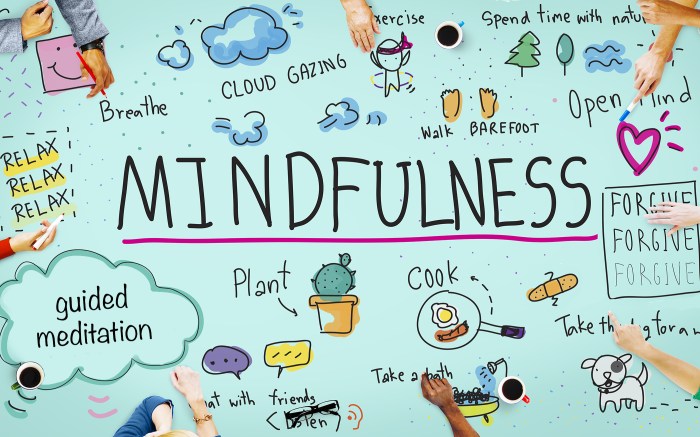
Mindfulness practices offer a powerful toolkit for navigating the various stressors that impact our lives. By cultivating present moment awareness, we can develop a more adaptive and resilient response to challenges, rather than reacting impulsively from a place of anxiety or fear. This section explores how mindfulness can be specifically applied to common sources of stress, fostering a sense of calm and control amidst life’s inevitable difficulties.
Mindfulness and Workplace Stress
Workplace stress manifests in numerous ways, from demanding deadlines and heavy workloads to difficult colleagues and unclear expectations. Mindfulness techniques, such as mindful breathing and body scans, can help manage these stressors by anchoring individuals in the present moment. Regular practice can reduce feelings of overwhelm and improve focus, enabling more effective task management and improved communication. For instance, taking a few mindful breaths before a challenging meeting can calm the nervous system and promote a more composed demeanor.
Similarly, incorporating short mindful breaks throughout the workday can help prevent burnout and maintain a sense of equilibrium.
Mindfulness and Relationship Stress
Relationship conflicts are a significant source of stress for many. Mindfulness offers a path towards more compassionate communication and conflict resolution. By practicing mindful listening – truly hearing and understanding your partner’s perspective without interruption or judgment – you can create a more empathetic and understanding space for dialogue. Mindful self-awareness also helps identify personal triggers and emotional responses, allowing for more conscious and constructive reactions during disagreements.
This approach fosters greater empathy and understanding, improving the overall quality of relationships.
Mindfulness and Financial Stress
Financial worries can be deeply pervasive, impacting mental and physical health. Mindfulness helps to manage these anxieties by shifting focus from anxious rumination about the future to the present moment. Techniques like mindful meditation can help reduce the intensity of anxious thoughts and feelings, creating space for clearer thinking and more effective problem-solving. Furthermore, mindful budgeting and financial planning practices can help promote a sense of control and reduce impulsive spending that may exacerbate financial stress.
For example, instead of panicking about a large debt, a mindful approach would involve breaking down the problem into smaller, manageable steps and focusing on taking action rather than being overwhelmed by the overall situation.
Mindfulness and Chronic Pain and Illness
Chronic pain and illness present unique challenges, often leading to feelings of helplessness and despair. Mindfulness can provide a valuable coping mechanism by shifting attention away from the physical sensations of pain and towards the present moment experience. Mindful movement, such as gentle yoga or tai chi, can improve flexibility and reduce muscle tension. Mindful breathing exercises can help regulate the nervous system and reduce pain perception.
Furthermore, mindfulness meditation can foster a sense of acceptance and self-compassion, which are crucial for navigating the emotional challenges associated with chronic conditions. For instance, instead of focusing solely on the pain, a mindful approach might involve acknowledging the discomfort without judgment and focusing on the sensations of the breath.
Mindfulness and Life Transitions
Life transitions – such as job loss, marriage, divorce, or the death of a loved one – are inherently stressful. Mindfulness provides a framework for navigating these changes with greater resilience and self-compassion. Mindful self-reflection can help identify and process emotions associated with these transitions. Mindful acceptance of the current situation, even if it is difficult, can reduce resistance and foster a sense of peace.
Mindful planning and goal setting can help create a sense of purpose and direction during periods of uncertainty. For example, during a period of job loss, mindfulness can help to manage the anxieties surrounding the future while focusing on actionable steps towards finding new employment.
Resources for Mindfulness and Stress Management
Mindfulness practices are widely supported by research and readily accessible through various resources. Below is a list of helpful resources:
- Book: Mindfulness for Beginners by Jon Kabat-Zinn
- Book: Wherever You Go, There You Are by Jon Kabat-Zinn
- Website: Mindful.org (offers articles, guided meditations, and courses)
- Website: UCLA Mindful Awareness Research Center (provides research-based information and resources)
- Article: Numerous peer-reviewed articles on mindfulness and stress reduction are available through academic databases like PubMed and Google Scholar.
Integrating Mindfulness into Health Blogs and Resources: Mindfulness For Stress
Mindfulness practices are increasingly recognized for their ability to alleviate stress and improve overall well-being. Integrating these techniques into health blogs and resources can significantly expand their reach and impact, providing readers with practical tools to manage stress and enhance their lives. This section explores how to effectively incorporate mindfulness into various health-related content formats.
Mindfulness Blog Post: Stress Reduction
This blog post will explore the powerful connection between mindfulness and stress reduction. The introduction will hook the reader by highlighting the pervasive nature of stress in modern life and the detrimental effects it can have on physical and mental health. It will then briefly introduce mindfulness as a practical and accessible solution. The body of the post will delve into specific mindfulness techniques, such as deep breathing exercises, body scans, and mindful movement, providing step-by-step instructions and emphasizing their benefits in stress management.
Each technique will be explained clearly and concisely, supported by evidence-based research where applicable. Real-life examples of how these techniques have helped individuals cope with stress will be included to enhance relatability. The conclusion will summarize the key takeaways, encouraging readers to incorporate these practices into their daily routines and emphasizing the long-term benefits of consistent mindfulness practice.
Infographic: Benefits of Mindfulness for Stress Relief
The infographic will be designed with a calming color palette, utilizing shades of blue, green, and teal. The main title, “Unlocking Calm: The Benefits of Mindfulness for Stress Relief,” will be prominently displayed at the top. The infographic will be divided into sections, each representing a key benefit of mindfulness. One section will showcase the impact of mindfulness on reducing cortisol levels (the stress hormone), potentially using a simple graph illustrating a decrease in cortisol after regular mindfulness practice.
Another section will depict improved sleep quality, perhaps using a stylized image of a person peacefully sleeping. A third section will highlight increased emotional regulation, potentially using icons representing different emotions (anger, sadness, joy) and arrows indicating a smoother transition between them. A final section will show the positive impact on focus and concentration, possibly using an image of a brain with enhanced neural connections.
Throughout the infographic, clear and concise text will accompany the visuals, making the information easily digestible.
Healthy Living Tips Incorporating Mindfulness
Mindfulness can be seamlessly integrated into various aspects of daily life to promote overall well-being. These tips will focus on practical applications, making mindfulness accessible to a wide audience. The list will include suggestions such as starting the day with a few minutes of mindful meditation, practicing mindful breathing during stressful situations, engaging in mindful movement through activities like yoga or tai chi, and incorporating mindful eating practices.
Each tip will be accompanied by a brief explanation of how it helps reduce stress and improve well-being. For instance, the tip on mindful eating will encourage readers to pay attention to the taste, texture, and smell of their food, eating slowly and without distractions.
Nutrition and Diet Guide: Mindful Eating for Stress Management, Mindfulness for Stress
This guide will emphasize the strong mind-body connection and how mindful eating can contribute to stress management. It will begin by explaining the impact of stress on eating habits, highlighting the tendency to overeat or make unhealthy food choices when stressed. The guide will then introduce the principles of mindful eating, such as eating slowly, savoring each bite, paying attention to hunger and fullness cues, and eliminating distractions during meals.
A sample meal plan incorporating whole foods and mindful eating practices will be provided, alongside recipes that emphasize fresh, nutritious ingredients. The guide will also include practical tips for managing emotional eating, such as identifying triggers and developing healthier coping mechanisms. The guide will conclude by emphasizing the long-term benefits of mindful eating for both physical and mental health, fostering a positive relationship with food and reducing stress levels.
Ultimately, mastering mindfulness for stress reduction is a journey of self-discovery and empowerment. By understanding the mind-body connection and incorporating mindful practices into your daily life, you can cultivate resilience, enhance well-being, and navigate life’s challenges with greater ease and clarity. This exploration has provided a framework; consistent practice is the key to unlocking the transformative potential of mindfulness.
Key Questions Answered
Is mindfulness only for people with high stress levels?
No, mindfulness is beneficial for everyone. Even those who don’t experience significant stress can benefit from increased self-awareness and improved emotional regulation.
How long does it take to see results from mindfulness practice?
Results vary, but many people notice positive changes in mood and stress levels within weeks of consistent practice. Regularity is key.
What if I find it difficult to quiet my mind during meditation?
It’s perfectly normal to have wandering thoughts during meditation. Gently redirect your attention back to your breath or chosen focus without judgment.
Are there any risks associated with mindfulness practices?
Generally, mindfulness is safe. However, individuals with certain mental health conditions should consult a healthcare professional before starting a new mindfulness practice.


